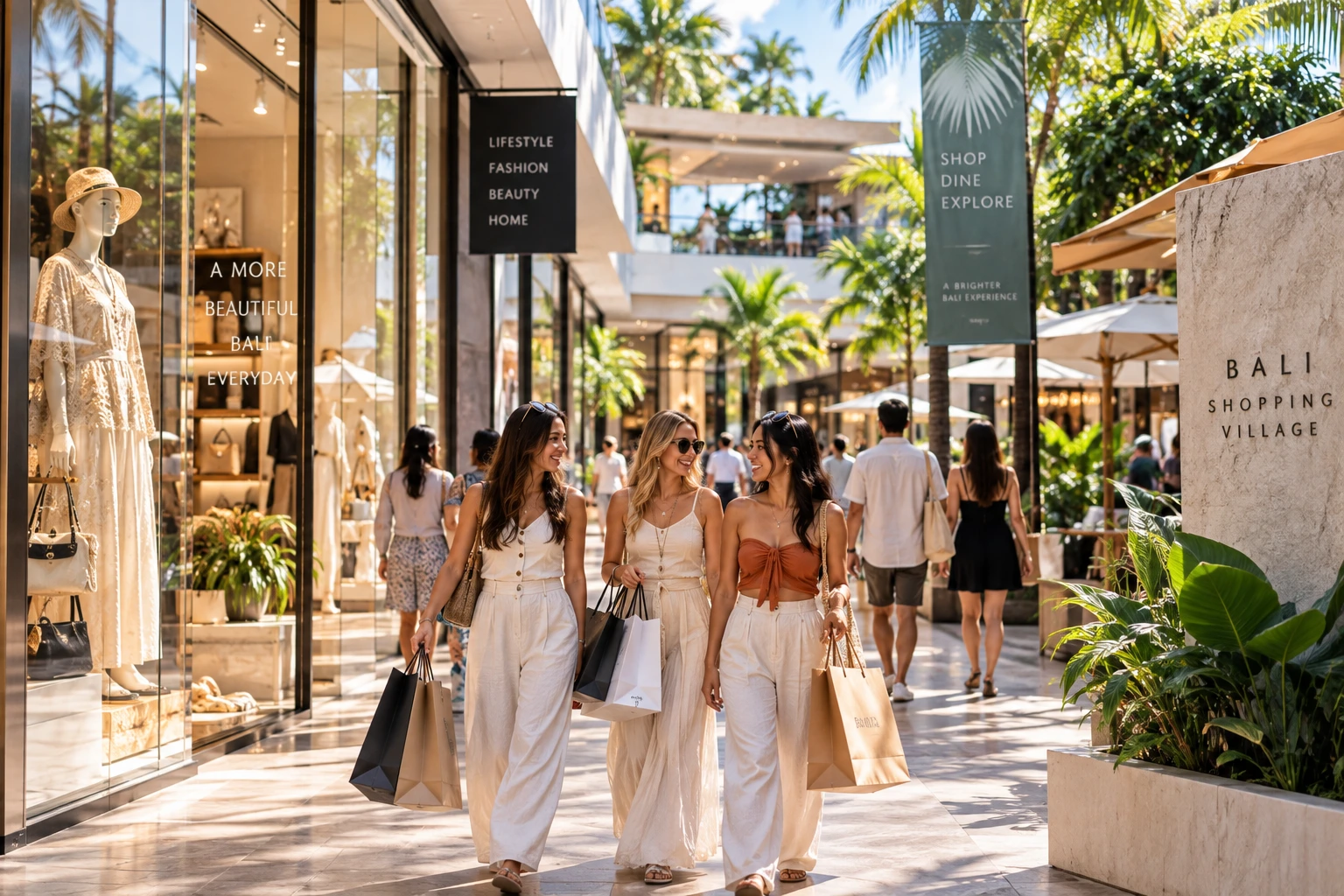
A successful shopping trip in Bali is not simply about choosing the most popular stores or visiting as many shopping areas as possible. Because Bali’s retail destinations are spread across different parts of the island and traffic conditions can vary considerably, a well-planned Bali shopping itinerary can help you spend more time shopping and less time travelling between destinations.
The most practical approach is to plan around your shopping goals, group destinations by area, allow enough time for browsing and meals, and leave some flexibility for unexpected discoveries. A good shopping day should feel like part of your holiday rather than a race from one store to another.
Bali offers many different shopping environments, from traditional markets and artisan-focused areas to modern retail destinations, boutiques, outlet shopping, and lifestyle centres. That variety makes planning especially important for visitors who want to experience shopping without sacrificing the rest of their holiday.
Start by Defining What You Want to Shop For
Before deciding where to go, determine what you actually want to buy.
This simple step can make a significant difference to your itinerary. Someone looking for handmade souvenirs has very different requirements from someone searching for fashion, sportswear, premium brands, beauty products, homeware, or gifts for family.
Start by creating a short shopping list and divide it into categories such as:
- Fashion and accessories
- Local products and handicrafts
- Gifts and souvenirs
- Sportswear
- Beauty and wellness
- Home and lifestyle products
- Food and packaged products
Once you know your priorities, it becomes easier to choose the right type of retail destination. Instead of spending an entire day moving between unrelated stores, you can concentrate your time around places that match your interests.
This approach is particularly useful in Bali because shopping experiences differ significantly between areas. Seminyak, for example, has a strong concentration of fashion boutiques and lifestyle retail, while traditional markets provide a very different experience centred on local products and everyday commerce.
Choose a Shopping Area Before Choosing Individual Stores

One of the most important rules for planning a Bali shopping itinerary is to think geographically.
Bali may look relatively compact on a map, but travelling between different areas can consume a large part of the day. Traffic can also become a major consideration in South Bali, particularly around busy commercial areas.
Rather than choosing several stores first and figuring out transportation later, select one general area as the foundation of your shopping day.
You might structure your day around:
- Seminyak and nearby areas
- Kuta and Legian
- Denpasar
- Ubud
- Sanur and nearby areas
- Nusa Dua and South Bali
This does not mean staying within one street all day. It simply creates a practical geographic boundary.
Grouping destinations geographically helps reduce unnecessary travel and gives you more time to browse, eat, relax, and enjoy the surroundings.
Build Your Day Around Shopping Time
A common mistake is creating an itinerary that contains too many stops.
A shopping visit rarely takes only the amount of time needed to enter a store and make a purchase. You may want to compare products, try something on, ask questions, browse another section, wait at checkout, or stop for a drink.
For that reason, it is better to give each major shopping stop enough time rather than creating a schedule packed with back-to-back locations.
A practical structure might look like:
Morning: Start with your highest-priority shopping category.
Late morning: Explore nearby stores or local retail.
Lunch: Take a proper break instead of eating while rushing between destinations.
Afternoon: Continue with secondary shopping categories.
Late afternoon: Leave time for browsing, dining, entertainment, or an unexpected discovery.
Evening: Finish in an area where you can comfortably have dinner or continue with another holiday activity.
This creates a more realistic day and reduces the pressure to leave one destination before you have finished exploring it.
Create a One-Day Shopping Plan
For visitors with only one dedicated shopping day, a detailed structure can make the experience considerably easier.
A useful reference is a Bali shopping itinerary 1 day that divides the day into several flexible blocks rather than assigning an exact minute to every activity.
For example:
9:30 AM – Start With Your Main Shopping Goal
Begin with the shopping category that matters most to you. Starting early can give you more time and make the first part of the day feel less rushed.
12:00 PM – Take a Lunch Break
Choose a restaurant or café close to your shopping area. This prevents unnecessary travel and gives you time to rest before continuing.
1:30 PM – Explore a Second Category
Use the afternoon for another shopping objective. This could be fashion after looking for local products in the morning, or lifestyle shopping after visiting a market.
4:00 PM – Leave Time for Discovery
Do not fill every remaining hour with a predetermined destination. This is a good time to explore something that caught your attention earlier.
6:00 PM Onward – Combine Shopping With Leisure
End the shopping portion of your day somewhere that also offers dining or entertainment. This makes the transition from shopping to an evening activity much easier.
The exact schedule will depend on your location, opening hours, transportation, and personal preferences. The important principle is to create time blocks rather than an overloaded checklist.
Consider Transportation Before You Shop
Transportation becomes even more important when you are carrying shopping bags.
Your choice between walking, ride-hailing, a private driver, or another form of transportation should depend on how many destinations you intend to visit and how much you expect to purchase.
A dedicated Bali shopping transportation plan should consider four things:
- Distance between shopping areas
- Traffic conditions
- Parking availability
- How you will carry your purchases
Walking can be ideal when several shops are located close together. Ride-hailing can be convenient for shorter transfers, while a private driver may make more sense for a longer shopping day involving several areas.
The type of shopping also matters. Carrying a few small souvenirs is very different from buying clothing, homeware, or larger items.
Set a Realistic Shopping Budget
A shopping day becomes easier to manage when you decide how much you want to spend before leaving your accommodation.
Your Bali shopping budget does not need to be extremely detailed. A simple division can be enough:
- Planned purchases
- Food and drinks
- Transportation
- Gifts and souvenirs
- Extra spending
The last category is important.
It is easy to discover something unexpected while travelling, particularly in Bali where local crafts, fashion, food products, and lifestyle goods can be found in many different retail environments.
Setting aside a small amount for spontaneous purchases allows you to enjoy these discoveries without affecting the rest of your holiday budget.
You should also consider how purchases will fit into your luggage. Buying several large items on the first day of a trip may create unnecessary problems later.
Make Room for Local Shopping Experiences

A shopping itinerary in Bali does not have to focus exclusively on modern retail.
Traditional markets can provide a different perspective on everyday life, local products, food, textiles, and crafts. Including these experiences can make a shopping day feel more connected to Bali rather than simply replicating a conventional mall visit.
Local shopping can also provide opportunities to discover products that are difficult to find elsewhere. Handmade goods, regional food products, crafts, textiles, and locally produced lifestyle items can become meaningful souvenirs because they are connected to the destination.
The experience of discovering these products can be just as important as the purchase itself.
Know When Bargaining Makes Sense
Understanding Bali shopping etiquette can make interactions more comfortable.
Bargaining depends heavily on the type of retail environment. It may be expected in some traditional markets, while fixed-price stores, boutiques, department stores, and modern retail destinations generally operate differently.
Before negotiating, look at how the shop operates. If prices are clearly displayed and the environment resembles a conventional retail store, it is usually better to assume that the price is fixed unless staff indicate otherwise.
In a traditional market, bargaining can be part of the shopping experience. However, it should remain respectful and reasonable.
Other basic etiquette also matters. Ask before photographing products or people, handle merchandise carefully, and be respectful toward local sellers and artisans.
The objective is not simply to get the lowest possible price. A positive interaction contributes to a better shopping experience for both visitors and sellers.
Leave Space for Dining and Rest
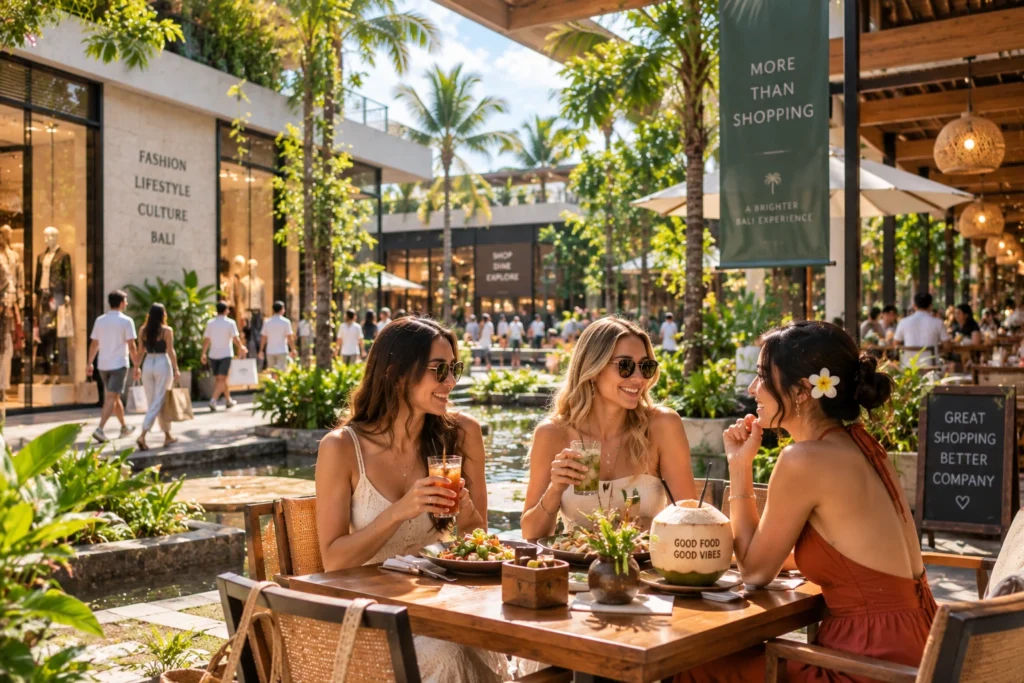
Shopping can be surprisingly tiring, especially when you are walking for several hours or carrying multiple bags.
This is why dining should be treated as part of the itinerary rather than an afterthought.
A lunch break can divide a long shopping day into manageable sections. A café stop in the afternoon can provide time to review purchases and decide what you still want to look for.
Retail destinations that combine shopping with restaurants, cafés, entertainment, and public spaces can make this particularly convenient. Instead of travelling elsewhere whenever you need a break, you can continue enjoying the same destination at a slower pace.
For tourists, this combination can also make shopping feel like a broader leisure experience rather than a purely transactional activity.
Choose Destinations That Fit Your Overall Holiday
Shopping should complement your Bali trip, not take over the entire itinerary.
If you are staying in South Bali, it may make sense to create a shopping day around destinations in that general area. Visitors staying in Ubud may prefer to incorporate shopping into a day that already includes cultural or artistic activities.
This is particularly useful when planning a shopping in Bali itinerary around other activities.
For example:
Morning: Cultural or sightseeing activity
Midday: Lunch
Afternoon: Shopping
Late afternoon: Café or leisure break
Evening: Dinner or entertainment
This structure gives shopping a defined place in the day without making the entire holiday feel like a retail trip.
It also allows you to experience the different sides of Bali that make the island attractive to visitors.
Choose the Right Type of Shopping Destination
There is no single type of shopping destination that works for every traveller.
Some visitors want traditional markets and local crafts. Others prefer air-conditioned retail environments, premium fashion, outlet pricing, international brands, or lifestyle stores.
The better question is therefore not simply “Where is the best place to shop in Bali?” but “What kind of shopping experience fits my trip?”
If your priority is discovering a combination of brands, local products, dining, and leisure in one destination, you can explore best places to shop in bali as part of your planning process.
The important point is to match the destination with your shopping objective instead of visiting somewhere simply because it appears on a generic list.
Keep Your Itinerary Flexible
Even the best shopping plan should leave some room for change.
A store may be more interesting than expected. A market may take longer to explore. You may find a local product that was not on your original list. Or you may simply decide that you would rather spend another hour having lunch and enjoying the atmosphere.
A flexible itinerary makes these decisions easier.
Instead of planning six or seven fixed shopping stops, choose two or three priorities and leave the remaining time open. This creates a better balance between structure and spontaneity.
It also reduces the stress that comes from constantly checking the clock.
Use Shopping as Part of the Bali Experience
A good Bali shopping itinerary is ultimately about more than buying products.
Bali’s shopping landscape includes modern retail destinations, independent boutiques, traditional markets, local artisans, lifestyle venues, and places where shopping can be combined with food and entertainment. These different environments give travellers the opportunity to create a shopping day that reflects their own interests.
For broader destination planning, travellers can also refer to Indonesia Travel, Indonesia’s official tourism platform, for information about destinations and experiences across the country.
The most effective approach is simple: define what you want to buy, choose an area, plan realistic time blocks, consider transportation, set a budget, allow time for meals and breaks, and leave room for unexpected discoveries.
When those elements are balanced, shopping becomes easier to navigate and much more enjoyable.
Instead of spending your holiday moving between distant locations, you can create a day where shopping naturally connects with dining, culture, leisure, and the wider Bali experience.
Frequently Asked Questions
How many shopping destinations should I visit in one day in Bali?
For a relaxed shopping day, two to four main stops are generally more realistic than trying to visit many destinations across the island. The right number depends on distance, traffic, shopping category, and how long you expect to spend at each location.
What is the best way to plan a shopping day in Bali?
Start with your shopping priorities, select a geographic area, estimate realistic time for each stop, plan transportation, and leave some free time for meals and unexpected discoveries.
Should I include traditional markets in a Bali shopping itinerary?
Yes, if you are interested in local products, crafts, food, textiles, or experiencing everyday commerce in Bali. Traditional markets can offer a very different experience from modern retail destinations.
Should I bargain when shopping in Bali?
Bargaining can be appropriate in some traditional markets, but many modern stores and established retail destinations use fixed prices. Observe the shopping environment and ask politely when you are unsure.
How can I avoid spending too much time travelling between shopping destinations?
Group destinations by geographic area and avoid creating an itinerary that requires repeated cross-island travel. Traffic conditions should also be considered when deciding how many areas to include in one day.


